https://youtu.be/QGLnOUpzVR4?si=QxNCG5mWQaxjsGLk The Church remembers the Ascension of our Lord Jesus Christ on the Thursday of the sixth week after Easter. The Ascension of our Lord is a very important and powerful part of the story of Redemption. Let’s dive in. Luke writes at the beginning of the Book of Acts that the Ascension took place forty days after the Resurrection of Christ, who presented himself alive to them by many proofs after he suffered, spoke about the kingdom of God, and gave instructions to the apostles through the Holy Spirit. This sets the scene – let's zoom in a bit closer. Firstly, there is a mighty Trinitarian argument embedded here. Because while Luke here assures us that Jesus proved he was alive, he also says he gave instruction through the Holy Spirit. How? Did the Spirit descend before Pentecost somehow? How was he teaching them through the Holy Spirit before the Spirit descended on Pentecost? We look to the Gospel of John for our answer, which will also reorient our perspective on the Resurrection. “I will not leave you as orphans,” Jesus promises in Jn. 14, “I will come to you.” In context, he is speaking of the Holy Spirit. “I will ask the Father, and he will give you another Paraclete to be with you forever — the Spirit of Truth…the Paraclete, the Holy Spirit, whom the Father will send in my name, will teach you all things and will remind you of everything I have told you.” (Jn. 13:16-17, 26). The Spirit, coming in the name of Christ, therefore bears His Name. This is why St. Paul could say, “The Lord is the Spirit” in 2 Cor. 3:17. This shared essence was articulated by the Church fathers with the Greek homousian, or the Latin consubstantialis. In the Gospel of John, Jesus teaches about his Resurrection in these terms at the Farewell Discourse. Paul’s discourse on the Resurrection in 1 Cor. 15 also speaks of it in spiritual terms -- His natural body was raised a spiritual body. A spiritual body, it must be noted, with all the characteristics necessary for proof that this indeed is the same Jesus Christ crucified who was raised, as opposed to a disembodied spirit. Just as Jesus promised in the Farewell Discourse recorded by John, he returned to them, and taught them many things before his Ascension, promising he would always be with them: “All authority in heaven and earth has been given to me. Therefore go and make disciples of all nations, baptizing in the name of the Father and of the Son and of the Holy Spirit, and teaching them to obey all that I have commanded you. And surely I am with you always, even to the end of the age.” (Mt. 28:18-20). John’s Gospel indicates that Jesus was a “life-giving Spirit” (1 Cor. 15:45), recording Jesus merely breathed on them. “Receive the Holy Spirit. If you forgive anyone’s sins, their sins are forgiven; if you do not forgive them, they are not forgiven.” (Jn. 20:22-23).” Luke’s parallel likewise says that “in His name repentance and forgiveness of sins will be proclaimed to all nations, beginning in Jerusalem” (Lk. 24:46-47). A few potentially contradictory details of note. First, Jesus here commands them to disciple the nations i.e. the Gentiles — and yet, it would be some years before Peter would baptize the first Gentile into Christ. Second, Jesus said “receive the Holy Spirit” — and yet, Luke records him saying just before His Ascension, “in a few days you will be baptized with the Holy Spirit.” (Acts 1:5) -- as if they had not yet received it by that time. We can infer, then, that since they had not yet received the promise of the baptism, or indwelling, of the Holy Spirit, the manner in which they had received instruction “through the Spirit” during the period between Resurrection and Ascension was in fact directly from the person of Jesus Christ Himself. Included in that instruction was the command to wait in Jerusalem “for the gift the Father promised” (Acts 1:4), that is, the indwelling of the Holy Spirit. In order for the Paraclete to come to dwell within each of the disciples, Jesus would himself have to depart from them, so that he may be in a position to send it, according to Jn. 16:7. The disciples would have remembered this, and therefore known from Jesus’ instructions about the promise of the Holy Spirit that his departure was imminent. Inferring this, the disciples then ask him an important question: “Lord, will you at this time restore the Kingdom to Israel?” They are referring to a promise he had made earlier about the “regeneration: “At the regeneration, when the Son of Man sits on his glorious throne, you who have followed me will also sit on twelve thrones, judging the twelve tribes of Israel.” (Mt. 19:28). This “throne” promise, in fact, is the prophecy of Daniel 7: “thrones were set in place and the Ancient of Days took his seat...the court was seated and the books were opened…” So the disciples were asking if their thrones were set in place and if they were about to be seated to render judgment over a restored Israel. In expecting this, they also expected the following: “one like a Son of Man, coming with the clouds of heaven. He approached the ancient of Days and was led into his presence. He was given authority, glory, and sovereign power; all nations and peoples of every language worshipped him. His dominion is an everlasting dominion that will not pass away, and his kingdom is one that will never be destroyed...the Ancient of Days came and pronounced judgment in favor of the holy one son the Most High, and the time came when they possessed the Kingdom.” The Apostles, therefore, almost certainly knew, with a great sense of anticipation, that Jesus had assembled them there to witness the glorious fulfillment of this vision. Jesus answers them soberly, “It is not for you to know the times or seasons that the Father has fixed by His own authority. But you will receive power when the Holy Spirit comes upon you.” He is saying to the disciples: “your part in the vision — your thrones, and your possession of the Kingdom, etc — comes at when the Holy Spirit comes to dwell in, and empower, you.” But for now, it was time for Jesus to fulfill His part, since He had promised many times and in many places that they would “see the Son of Man coming on the clouds with great power and glory” as Daniel had long ago foretold. Lo and behold, “after he had said this, they watched as he was taken up, and a cloud hid him from their sight.” The New Testament in many places identifies this moment with Jesus’ exaltation to the throne of God, summarized with characteristic simplicity by Mark: “The Lord Jesus, after he spoke to them, was taken up into heaven and took his seat at the right hand of God.” (Mk. 16:19). It was, in fact, the Ascension that fulfilled the prophecy of the Son of Man coming on the clouds. Some Christians are accustomed to thinking, perhaps because they were taught, that this prophecy has not been fulfilled yet. But this is based on a reversal of the prophetic image: those who say the “Son of Man coming on the clouds of heaven” is the promise of the descent of the Lord from heaven to earth, neglect the crucial detail that the prophecy of Dan. 7 actually speaks of the Son of Man ascending from earth to heaven and being led in to the presence of the Most High. Once you see it, you can’t unsee it. As for the Lord’s return, two angels appeared beside the apostles after the Ascension to say, “Men of Galilee, why do you stand here looking into the sky? This same Jesus, who has been taken from you into heaven will come back in the same manner you saw him go into heaven.” What was the manner in which they saw him taken up? “A cloud hid him from their sight.” In other words — the the Lord would be henceforth hidden. This is why they asked, “Why are you staring at the sky?” The rhetoric here implies, “Why bother searching the skies for something that is hidden? For he will likewise return in a hidden manner.” In so many places, Jesus spoke of his coming as hidden, like a thief in the night. In the Farewell Discourse, however, he unveiled the mysterious matter to his faithful disciples: He would come to be with them forever in the Paraclete. There is another important detail for our understanding of the “manner” in which Jesus ascended and would return: the clouds themselves. What are these clouds, hiding the form of Christ? Since heaven is described in the Bible as a temple, the clouds are likened to the smoke of temple incense, and called the glory of the Lord. These are the clouds of the Transfiguration: “a bright cloud cast a shadow over them, then from the cloud came a voice that said, ‘This is my beloved Son, with whom I am well pleased: listen to him.” (Mt. 17:5). Note that the cloud is bright, implying fire (we tend to forget that fire was the primary form of terrestrial light in Biblical times). In Exodus 19:18, “Mount Sinai was completely enveloped in smoke, because the Lord had come down upon it in fire.” The presence of the Lord in the cloud is known as the Shekinah glory, a smoking cloud by day and light of flaming fire by night. This glorious presence is exactly what Isaiah promised would be given to Zion in the days of Christ (Is. 4:5). For all their brightness, the glory clouds also hide the Lord like a shroud: “he made darkness his cloak around him” (Ps. 18:11); “clouds and darkness surround him…fire goes before him” (Ps. 97:2-3). The clouds of heaven, then, envision the fire and smoke of burnt sacrifices as icons of the Holy Spirit. Paul describes Jesus as a burnt offering in Eph. 5:2, who “handed himself over for us as a sacrificial offering to God for a fragrant aroma” — consumed by the fire of the Holy Spirit. Similarly, the Book of Hebrews details how Christ’s self-offering fulfilled the type of the Day of Atonement sacrifice. After the high priest entered into the Holy of Holies to present the blood of the sacrifice, he appeared a second time to proclaim salvation to the people, and then he would burn the offerings outside the camp. These correspond to Christ’s death, resurrection, and ascension. When the author of Hebrews says, “let us therefore meet him outside the camp” (Heb. 13:13), he is suggesting that we too offer ourselves like Christ as a burnt offering — to be consumed by the flames of the Holy Spirit, rising up to heaven in the glory cloud. In this way, the holy ones also “come on the clouds” with him (Zech. 14:5; 1 Thess. 3:13; Rev. 19:11-14) — those who, through baptismal resurrection, are “like the angels in heaven” (Mt. 22:30) whom the Son of Man sends out for the great harvest (Lk. 10:2) with the trumpet blast of the gospel of resurrection (1 Cor. 15:52). In Rev. 10, this scenario is envisioned as the descent and shout of the archangel (1 Thess. 4:16), where the opened scroll of the gospel is given to John, and he is called to evangelize the nations. The open scroll is a symbol of the “mystery of God fulfilled” (Rev. 10:7), which Paul said was “revealed by the Spirit to God’s holy apostles and prophets…that through the gospel the nations are heirs [together with Israel], members together of one body, and sharers together in the promise in Christ Jesus.” (Eph. 3:6). This was the way by which “all Israel [would] be saved” (Rom. 11:26) and how Jesus would restore the Kingdom of Israel (Acts 1:6). They would all, therefore, constitute that “great cloud of witnesses” (Heb. 12:1) coming with the Son of Man on the clouds in the unity of the Holy Spirit, that bright flame illuminating the cloud. This then explains what the two angels meant when they said, “he will come back in the same manner you saw him go into heaven” — that is, in the glory cloud. In the very next chapter, these words come true: “when the day of Pentecost came, they were all together in one place. Suddenly a sound like a mighty rushing wind came from heaven and filled the whole house where they were sitting. They saw tongues like flames of fire that separated and came to rest on each of them. And they were all filled with the Holy Spirit.” (Acts 2:1-4). The rich indwelling of the Holy Spirit is how Jesus “comes to be glorified in his holy ones” (2 Thess. 1:10), in other words. John’s way of saying it is that Christ appears in those who, because they are able to see him as he is, truly imitate him (1 Jn. 3:2). Paul speaks of it in terms of childbirth until Christ is formed in the disciple (Gal. 4:19), becoming conformed to the image of Christ (Rom. 8:29); and being transformed into his image from glory to glory (2 Cor. 3:18) — this is the passage where he explicitly invokes the consubstantiality of the Son and Spirit with the words “the Lord is the Spirit,” showing that the indwelling of the Spirit and the indwelling of Christ are the same. Lastly, Paul identifies man as the “glory of God” in 1 Cor. 11:7. We can therefore understand the glory clouds as pertaining to the Holy Spirit, and the unity thereof subsisting in the communion of saints. We might be accustomed to thinking “he will come back in the same manner you saw him go into heaven” refers not to Pentecost and the Life of the Spirit, but the Second Coming. The context, as we have seen, doesn’t allow for such a narrow interpretation. The Farewell Discourse is especially explicit that the Parousia of the Lord was in the Paraclete — a Paracletian Parousia, if you will. The Ascension, therefore, fulfills Daniel’s vision, and Jesus’ promise, of the Son of Man coming on the clouds of heaven. It also signaled to the disciples the manner in which he would return on Pentecost and onward, in the baptismal, fiery cloud of the Holy Spirit when He would be glorified in them as He was glorified in the Father and the Father in Him, as He had taught at the Last Supper (Jn. 13:31-32) — and this in turn would fulfill the rest of Daniel’s vision where the saints receive their share in the Son of Man’s dominion, reigning unto eternal life (Rom. 5:21) in His Kingdom. As the Ascension signaled the “manner in which he would return” to the 1st century disciples, it should signal the same to us: he did not leave us as orphans, but comes to us in the Holy Spirit. As he made this promise at the Last Supper, this may be understood as a Eucharistic promise as well. When Our Lord Jesus Christ vowed to the seven Churches of Revelation two thousand years ago that He was coming soon, three of these promised comings — to Ephesus, Pergamum, and Laodicea — are explicitly Eucharistic: “to the one who overcomes” in Ephesus, “I will grant the right to eat from the tree of life”; “to the one who overcomes” in Pergamum, “I will give the hidden manna”; “if anyone hears my voice” in Laodicea “and opens the door, I will come in and dine with him.” The voice here is the voice of the Lord as the Spirit, as he closed each letter to each church with the signature, “He who has an ear, let him hear what the Spirit says to the Churches.” Hence, the early Church celebrated their Eucharist not simply by eating bread and wine, for bread and wine does not a Eucharist make; but with supplications and prayer through the Holy Spirit, and the prayerful post-communion proclamation of the Real Presence with the Aramaic “Marana tha,” which means “The Lord has come!” (Didache 10:6). These are the prayers of the faithful, those who hear the voice of the Spirit and open the door, and by the Spirit’s power, overcome — Our Lord never fails to come to those who, calling on his name, answer his call; or to enter in to those who open the door when he knocks (Rev. 3:20). Everything that is the Father’s belongs to the Son; we belong to the Father, and the Son is glorified in us (Jn. 17:10). Since we have God for a Father, we are his heirs and joint-heirs with Christ (Rom. 8:16-17) — and Christ is heir of all things (Heb. 1:2). “Everything belongs to you…the world or life or death, or the present or the future: all belong to you, and you to Christ, and Christ to God.” (1 Cor. 3:21-23). All things beneath Christ’s feet are also beneath our own, for “God raised us up with Christ and seated us with Him in the heavenly realms in Christ Jesus, in order that in the coming ages he might display the surpassing riches of his grace, demonstrated by his kindness to us in Christ Jesus.” (Eph. 2:6-7). Since the Lord was so gracious to give us these gifts, may we live our lives in such a way as to be worthy of what we have received from him: hearing his voice, opening the doors of our heart to him, seeing him in all people as He taught us to, and loving them as he loved us all. We offer ourselves to our Father through the all-consuming fiery Holy Spirit of Love in the name of the Son who went before us as a burnt offering at his Ascension. May our prayers arise as the clouds of incense (Ps. 141:2). Amen. You're currently a free subscriber to Seán McMahon. For the full experience, upgrade your subscription.
|
Thursday, May 29, 2025
Feast of the Ascension 2025






Tuesday, May 27, 2025
The Glory of Christendom and the Humility of Christ
The Glory of Christendom and the Humility of Christ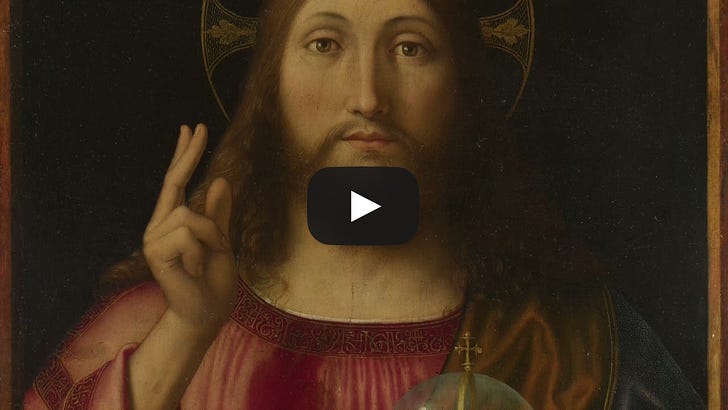 There would seem to be a contradiction between the humility of Christ and the glory of Christendom, that great edifice of Christian civilization. The Christ for whom the great cathedrals were built; Crusades were fought; Inquisitions were tried; Reformations and Counter-Reformations were pursued; and blood was indeed shed, was a lowly carpenter Christ local to the Levant. Doubtless, he was, by nature, God, but he “did not consider equality with God something to be grasped, but he emptied himself, taking the form of a servant.” (Phps. 2:6-7). It was in this humble form that he desired to be seen, heard, and imitated when he came among men. So why such glorying in the name of such a humble person? Some, when they walk into the great cathedrals of Europe, cannot take the beauty and grandeur as anything other than vanity and hubris. “All this,” they ask, “in the name of the carpenter king? “Surely this money could have been given to the poor,” they add, echoing Judas Iscariot (Mt. 26:9). The letters of holy writ cast light on the “why” of Christendom. It’s no accident that the great empire of Christ arose as it did, but evidence — of divine order ordained from the foundation of the earth. It is admittedly difficult to explain Christendom to its more agnostic, if not atheistic, citizens. Nonetheless, citizens of Christendom they are indeed. All are. It’s the Lord's world — we’re just living in it. John the Revelator saw a vision in which the great gospel was proclaimed by an angel: “The kingdom of the world has become the kingdom of our Lord and of His Christ, and He will reign forever and ever.” (Rev. 11:14). The seer was ancient and so was the vision. The Kingdom of God, in fact, has always been present in mystery, subsisting first in Eden, then in Noah’s Ark; in the dreams and loins of Abraham, then in the ark and tablets of Moses; in the first Messiahs of Israel, David and his son Solomon; in the father’s crown and scepter and in the son’s temple; in the oracles of the prophets and in the hopes of those few who believed them; in the remnant of Judah returning from Babylon, and lastly, hidden in the womb of Mary until the moment of revelation finally came. “When the fullness of time had come, God sent his Son” (Gal. 4:4) who proclaimed: “the time has come. The Kingdom of God is at hand. Repent, and believe the good news!” (Mk. 1:15). In John’s vision, this proclamation is a trumpet blast signifying “the mystery of God” is fulfilled. St. Paul wrote that this mystery “was not made known to men in other generations,” but that in his time it had been made known by the apostles of Christ: “this mystery is that through the gospel the nations are fellow heirs [together with Israel], fellow members of the body, and fellow partakers of the promise in Christ Jesus.” (Eph.3:5-6). The glorious gospel, then, is the proclamation of the kingship of Jesus of Nazareth over all nations. All nations have been absorbed into Israel because when he was lifted up, Jesus drew all men to himself (Jn. 12:32). Far from the Church of Jesus Christ superseding Israel, the Church and Israel are, in Christ, one and the same — and Israel has therefore superseded the world by Christ. The great wedding feast of God (Rev. 19:17) had brought together the pure heavens and the lusty earth, the veil of enmity between them torn asunder by Christ, who made peace between the two by his shed blood. By rights of mercy, the perfect one rules over the imperfect, making all who were captors of sin debtors to the one who forgives us. This is the sense of the vision John recorded in Revelation 19: Christ riding the white horse of spiritual warfare; leading the apostolic armies of heaven; wearing the many royal crowns of every nation on his head, because by rights of mercy he has made them his own; his robe dipped not in the blood of his enemies, but his own blood; wielding a sword not of steel, but that of the spiritual word “with which to strike down the nations and he will rule them with an iron scepter.” The iron scepter evokes the iron legs and feet of a statue seen in a dream by Nebuchadnezzar long before the Day of Christ, which the prophet Daniel interpreted to signify that empire which would rule at the time of Christ’s manifestation (Dan. 2). A rock is cut out of a mountain by divine hands, hurled at the statue, and the statue crumbles while the stone becomes the greatest of all mountains. Daniel tells Nebuchadnezzar — known at that time as the “king of kings” — that the rock would be Christ, for whom “the God of heaven will set up a kingdom that will never be destroyed, nor will it be left to another people. It will shatter all these kingdoms and bring them to an end, but will itself stand forever.” (Dn. 2:44). In another vision, Daniel saw that this would be the time of the great judgment, when “the Ancient of Days…pronounced judgment in favor of the saints of the Most High” (Dn. 7:22) and “the sovereignty, dominion, and greatness of the kingdoms under all of heaven will be given to the people, the saints of the Most High.” (Dn. 7:27). And so we see that the empire standing at the time of Christ’s manifestation — Rome — was promised to the saints. It was during that Empire’s reign over the nations when God would “come to be glorified in his holy people and to be marveled at among all those who have believed” (2 Thess. 1:10). It is no coincidence that when the Gentiles first came to seek Jesus, he declared, “the hour has come for the Son of Man to be glorified.” (Jn. 12:20). He spoke not of being enthroned in Jerusalem, but going to the cross to shed his blood — not just for Jews only, or even a restored Israel only, but for the whole world. He did this “so the nations would glorify God for His mercy.” (Rom. 15:9). The glory of Christendom, then, is Christ glorified in his saints, and his saints glorified in him. The Bible urges us toward glory in mercy: “accept one another, then, just as Christ accepted you, in order to bring glory to God.” (Rom. 15:7). We should see the great edifice of Christendom in this light: man’s attempt to “do everything in the name of the Lord Jesus Christ, giving thanks to the Father” (Col. 3:17). Man’s part in Christendom is gratitude incarnate — and this we should do to the highest degree of our ability. St. Peter urges us toward excellence: “make every effort to supplement your faith with virtue, and virtue with knowledge, and knowledge with self-control, and self-control with steadfastness, and steadfastness with godliness, and godliness with brotherly affection, and brotherly affection with love." (2 Pt. 1:5-7). This is a supplement to faith. The supplement does not save: Jesus does. Our faith allows us to glorify him in our participation, whereby he is glorified in us. In this way, “God will count [us] worthy of his calling” (2 Thess. 1:11) — not that we must first be worthy in order to receive his grace, but that we may honor him for the gift he has already given us — and “he will powerfully fulfill your every good desire and work of faith, so that the name of our Lord Jesus will be glorified in you, and you in Him, according to the grace of our God and of the Lord Jesus Christ.” (2 Thess. 1:11-12). Might we ever reach perfection in pursuit of this worthiness? Perfection seems impossible, and yet, scripture speaks of it: “let steadfastness have its full effect, that you may be perfect and complete, lacking nothing” (James 1:4); “be perfect as your Father in heaven is perfect.” (Mt. 5:48). It would seem impossible for man, but nothing is impossible with God (Lk. 1:37); the perfect Son indeed came to reveal the perfect Father, to the end that “whoever believes in Me will also do the works that I am doing. He will do even greater things than these, because I am going to the Father. And I will do whatever you ask in My name, so that the Father may be glorified in the Son. If you ask Me for anything in My name, I will do it.” (Jn. 14:12-14). The Lord wants us to dream big. He wants us to ask him for big favors. He wants our vision to be wide and all-encompassing: “everything is yours, whether…the world or life or death or the present or the future—all are yours, and you are Christ’s, and Christ is God’s." (1 Cor. 3:21-23). Therefore, Christendom is our imperative: ever-expanding, all-encompassing greatness in the name of Christ. St. Peter, named after the rock which would shatter and absorb the Roman Empire, has ever had a successor on the throne in the city at its heart. The one wearing the Petrine mantle has traditionally been head — official or unofficial, ruling in charity or tyranny — of Christendom. Pope Leo XIV, who today exercises Peter’s ministry, reminds us of the meaning of his Petrine namesake, and what it reveals about our vocation to excellence in Christendom: “The Apostle Peter himself tells us that Jesus ‘is the stone that was rejected by you, the builders, and has become the cornerstone (Acts 4:11). Moreover, if the rock is Christ, Peter must shepherd the flock without ever yielding to the temptation to be an autocrat, lording it over those entrusted to him (cf. 1 Pet 5:3). On the contrary, he is called to serve the faith of his brothers and sisters, and to walk alongside them, for all of us are ‘living stones’ (1 Pet 2:5).” When we build Christendom, then, “it is never a question of capturing others by force, by religious propaganda or by means of power. Instead, it is always and only a question of loving as Jesus did.” Indeed, when Jesus said “I am glorified in them” (Jn. 17:10), there is a condition: “Remain in Me, and I will remain in you. Just as no branch can bear fruit by itself unless it remains in the vine, neither can you bear fruit unless you remain in Me. I am the vine and you are the branches. The one who remains in Me, and I in him, will bear much fruit. For apart from Me you can do nothing. If anyone does not remain in Me, he is like a branch that is thrown away and withers. Such branches are gathered up, thrown into the fire, and burned. If you remain in Me and My words remain in you, ask whatever you wish, and it will be done for you. This is to My Father’s glory, that you bear much fruit, proving yourselves to be My disciples.” (Jn. 15:4-8). By the fruits, the tree is known. Therefore, in order to glorify our root, Christ, we must bear Christian fruit in a life of imitation of Our Lord. St. Paul puts it bluntly: we must “suffer with him in order that we may also be glorified with him.” (Rom. 8:17). The next time you gaze at a grand cathedral, consider then the suffering it took to build. Centuries’ worth of diligence. The Cologne Cathedral took six and a quarter centuries to build. Let’s not pretend there isn’t suffering in hard work, there is. This was the hard work of generations, living and dying in this labor. All of this for a building — a meeting-place and shelter, yes, but also, an icon of heaven, and a symbol of the mysteries revealed in Christ. How much more suffering is required to “build” the spiritual edifice of Christendom — that Kingdom above all others, and yet hidden to its enemies, who have long been eager to beat, behead, burn, crucify, hang, draw, quarter, and more, those angelic messengers who proclaim the truth of Christ’s Kingship over all? The blood of the martyrs is one in holy communion with Christ’s, who died for all that this truth may be revealed and proclaimed to the blind, and His resurrection preached to the spiritually dead. May we all walk with Christ in the Via Dolorosa of his Passion for the sake of His glorious Kingdom. Christendom is not so much built as it is revealed, for Christ is King no matter what — but he must be revealed in his Church, glorified in his saints. The church calls this sanctification “theosis”. “When he appears,” St. John wrote of theosis, “we shall be like him.” (1 Jn. 3:2). That is, Christ appears in us when our imitation of him reaches perfection. In this manner “he will transform our lowly bodies so that they will be like his glorious body.” (Phps. 3:21). We pray that our bodies may so become the bodies, and body, of Christ by the indwelling of his Spirit. In this way, the humble Christ is translated into the glory of Christendom. Amen. You're currently a free subscriber to Seán McMahon. For the full experience, upgrade your subscription.
|