
Look Up!“Get behind me, Satan! You are a stumbling block to me; for you are setting your mind not on divine things but on human things.”
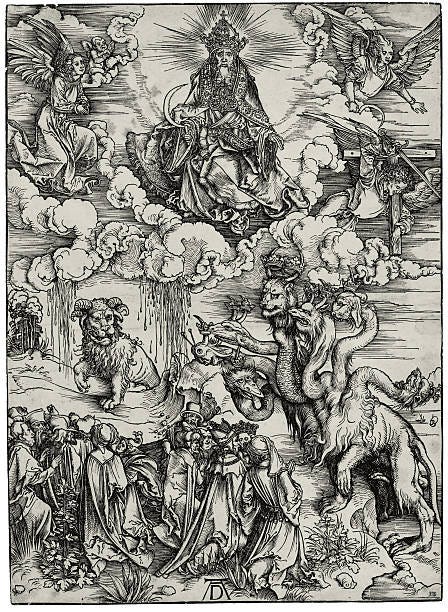
Scripture ReadingMatthew 16:21-28Jesus began to show his disciples that he must go to Jerusalem and undergo great suffering at the hands of the elders and chief priests and scribes, and be killed, and on the third day be raised. And Peter took him aside and began to rebuke him, saying, “God forbid it, Lord! This must never happen to you.” But he turned and said to Peter, “Get behind me, Satan! You are a stumbling block to me; for you are setting your mind not on divine things but on human things.”Then Jesus told his disciples, “If any want to become my followers, let them deny themselves and take up their cross and follow me. For those who want to save their life will lose it, and those who lose their life for my sake will find it. For what will it profit them if they gain the whole world but forfeit their life? Or what will they give in return for their life?“For the Son of Man is to come with his angels in the glory of his Father, and then he will repay everyone for what has been done. Truly I tell you, there are some standing here who will not taste death before they see the Son of Man coming in his kingdom.”Scripture ReflectionCan you imagine rebuking Jesus, who rebuked storms and made them still with his words? Though Jesus could silence demons with his rebuke, Peter rebuked him when he began to teach about his own Suffering, Death, and Exaltation. It is very likely that Peter protested because he was horrified that Israel’s hope would be arrested, scourged, and crucified, and equally in disbelief that he could then rise again. He had other things in mind for Jesus: “human things.” So did Satan. When the Spirit drove Jesus into the wilderness of temptation, Satan offered Jesus the Kingdoms of the world. This bounty is precisely what the divine oracles of the prophets said would be handed over to the Christ. It’s not that the Kingdoms of the world weren’t in store for Jesus, they were — it’s that Satan was offering a bad deal. “I will give You authority over all these kingdoms and all their glory,” he said. “For it has been relinquished to me, and I can give it to anyone I wish. So if You worship me, it will all be Yours.” (Lk. 4:6-7). But this is not the divine way to glory, the way of the Lamb. Satan was offering the way of the beast, as we read in Revelation: “The dragon,” that old serpent, the devil, “gave the beast his power and his throne and authority.” (Rev. 13:2). Rising out of the “sea,” or the nations, this beast is that dominion which oppressed God’s people. And this beast even lent its authority to a fraudulent “Lamb,” a beast rising out of the “land,” or Israel, which “caused the earth and those who dwell in it to worship the first beast.” (Rev. 13:12). These two beasts represented the forces which conspired to put Jesus to death, Rome and the apostate synagogue. Politics and politicized religion in lockstep with the devil. Jesus, the true Lamb, would gain dominion over even these — but not by avoiding the fate they had planned for him. In fact, he would not come into his Kingdom by any other way than subjecting himself to their torture, as it was foretold: “O foolish ones, and slow of heart to believe all that the prophets have spoken! Was it not necessary for the Christ to suffer these things and then to enter His glory?” (Lk. 24:25-26). Peter rebuked Jesus because he wanted to see Jesus sitting on a throne in Jerusalem, ruling over the nations as Caesar did. He wanted Jesus to take the dragon’s deal, the way of the beast. Likely, he wanted the same for himself, expected it even, having heard Jesus promise, “Truly I tell you, in the renewal of all things, when the Son of Man sits on His glorious throne, you who have followed Me will also sit on twelve thrones, judging the twelve tribes of Israel.” (Mt. 19:28). But here, Jesus radically tweaks their expectations of this. “If any want to become my followers,” he says, as if they hadn’t truly been following him up to that point, “let them deny themselves and take up their cross and follow me.” Cross? Like crucifixion? The punishment for failed revolutionaries, hopefuls like them who had longed for the liberation of Israel? “For those who want to save their life will lose it, and those who lose their life for my sake will find it.” Is he talking about dying for him? “For what will it profit them if they gain the whole world but forfeit their life?” Didn’t the prophets promise the whole world to God’s people in the Messianic age? Why was he speaking as if one may only choose between the world and life? And yet, he recapitulates his promise of dominion to them, “For the Son of Man is to come with his angels,” that is, his holy followers and messengers like Peter, and even you and I, “in the glory of his Father, and then he will repay everyone for what has been done.” Does he truly have the power to repay life lost for the Kingdom? “Truly I tell you, there are some standing here who will not taste death before they see the Son of Man coming in his kingdom.” What is Jesus saying here? He is challenging them to martyrdom for the victory of the Kingdom, yet also suggesting they may also live to see it. Indeed, they would live to see it. But it was far different than the “human things” Peter had in mind for Jesus and himself. The “divine things” were far more mysterious and challenging. For one cannot see the Kingdom except from Christ’s vantage point, elevated upon the Cross. On the other side of Pentecost, Paul was able to speak of the “divine things” in “the mind of Jesus” from his vantage point in Php. 2: “He humbled Himself and became obedient to death — even death on a cross,” just as he had taught. “Therefore,” that is, because of his suffering and death, “God exalted Him to the highest place and gave Him the name above all names, that at the name of Jesus every knee should bow, in heaven and on earth and under the earth, and every tongue confess that Jesus Christ is Lord, to the glory of God the Father.” Indeed, Peter and the apostles did live to see Christ enter into his paschal glory. And they received their promised thrones of judgment in his Kingdom. Long before he tasted his own death by which he also finally came into glory, glorifying God (Jn. 21:18-19), Peter received the very Spirit of Christ at Pentecost, the Spirit who reigns over all heaven and earth, and began “convicting the world with regard to sin, righteousness, and judgment” (Jn. 16:8), that is, judging the twelve tribes of Israel, and not only them but all the nations, to whom he preached. This was glorious, but not in the human way he had first imagined. It was glorious in the divine, paschal way he witnessed in Jesus. Peter as angelic messenger of the glory of God did not come by the power of the beast, but by the power of the Lamb slain for the life of the world. Peter surrendered his life as Jesus had taught; and Jesus repaid him with his own life, the Spirit of Resurrection and eternal life, by which he subdued and gained the world. “For all things are yours” when you are Christ’s (1 Cor. 3:21-23). Let us never forget that, to be Christ’s, we must deny ourselves and take up our crosses. That’s the only way he gave us. We should beware lest we wander away from it. It is all well and good to preach to centurions, prefects, commanders and kings. This is our Great Commission from Jesus. But to maneuver for their power in the name of the Kingdom is the way of the Beast, and a step too far beyond our royal Lamb’s edict. This may be just me — though I wish it weren’t — but I make no distinction between an imperial Christian nationalism that sits on one side of the aisle, more concerned about controlling what people do with their bodies in their private time in the name of “holiness”, and an imperial Christian nationalism that sits on the other side, obsessed with how to control people’s money and resources in the name of “justice”. Barking viciously at each other from across the proverbial aisle, they are simply two sides of the same beastly coin. In my humble opinion, they seek after “human things” which were never in the mind of Christ. “Get behind me, Satan!” Jesus wasn’t exalted to heaven because he waged a successful campaign of compulsion, forcing everyone to conform to him and his opinions with the full arsenal of the “vessels of wrath” — the avenging authorities of governance (Ro. 9:22, 13:1-4) — at his disposal. Rather, he emptied himself of “human things,” whether the political power which was rightfully his as King of Israel, or even life, which he gave up at the Cross at the hands of those who simply disagreed with him, and he was exalted because all that was left, after the blood drained out, was divinity, the love and will of the Father accomplished in his lifeless body broken for the life of the world. The divine Kingdom which is gained by walking the way of the Lamb makes a mockery of all human kingdoms marching the way of the beast. Politics are, at best, self-righteousness writ large. From debates to war, it’s all the same — a fruitlessly reaching vanity, all failing to attain to the holiness and justice and glory of the Lamb. What good, indeed, is it to gain the world and forfeit his life in us, which is so simple and strong? In Revelation, we are told that the royal Lamb made his new and heavenly Jerusalem, the Church, the capital of his glorious Kingdom in our world, by whose light all nations walk, and into which their kings bring their riches (Rev. 21:24). Which kings, and what riches? No one is called truly royal but Christ and his “royal priesthood”, his faithful (1 Pt. 2:9). As for the worldly rich, “weep and wail over the misery to come upon you. Your riches have rotted and moths have eaten your clothes. Your gold and silver are corroded. Their corrosion will testify against you and consume your flesh like fire.” (Ja. 5:1-3). How vain is the beast-minded Christian who measures success and justice by either the enlargement of these “riches,” these marks of the beast, or their “just” appropriation and redistribution. These are not truly “riches” worthy of the Kingdom of God. But if you would be truly royal, “store up for yourselves treasures in heaven, where moths and vermin do not destroy, and where thieves do not break in and steal. For where your treasure is, there your heart will be also.” (Mt. 6:20-21). Peter ultimately got the message. “Silver and gold I do not have,” he said to the beggar who hoped for and expected a “blessing” of “unrighteous mammon”, “but what I have I give you” — that is, Christ in his heart. (Ac. 3:1-10). Do not be a beggar after moth-eaten riches; do not be their slave, and do not presume to make others slaves of them either. Do not let anyone convince you, nor you convince others, that the answer to life’s woes is corrosive riches, whether mammon or the type of power it buys, which will consume our flesh like fire. The Bible and history itself bear witness that these are chief among the dragon’s ruinously false promises. The beast-powers at work to compel these things are those which crucified Christ. Dare we align with the beast and rebuke the Lamb, as Peter once did before he repented? Any any rate, should we align with the Lamb, the beast-powers will certainly force us to carry our cross to Calvary. We should take comfort in this, freely following Jesus where he leads us, for there awaits our own exaltation. Let our minds be full of hope for divine rather than human things. “From now on, stop being preoccupied with useless things: what the city has done, what the town has done, what the king has done…Look up! The time requires this of you. ‘Be still and know that I am God.’” (St. Cyril of Jerusalem, The Procatechesis 13). Amen.
Song Meditation: “No Way Up But Down”
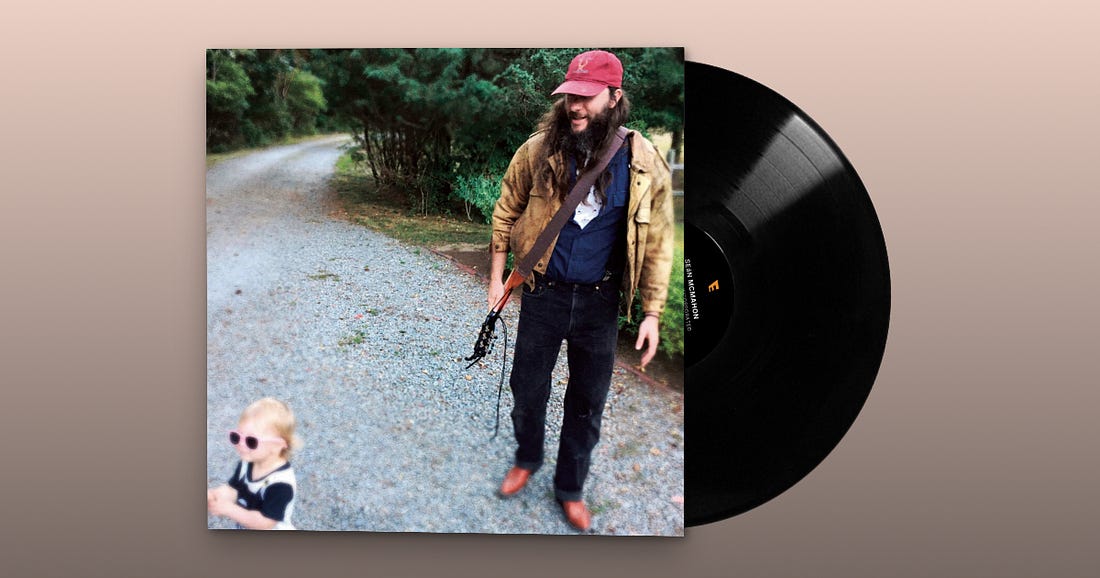
“Small Town Incorporated” Out Now On Vinyl!
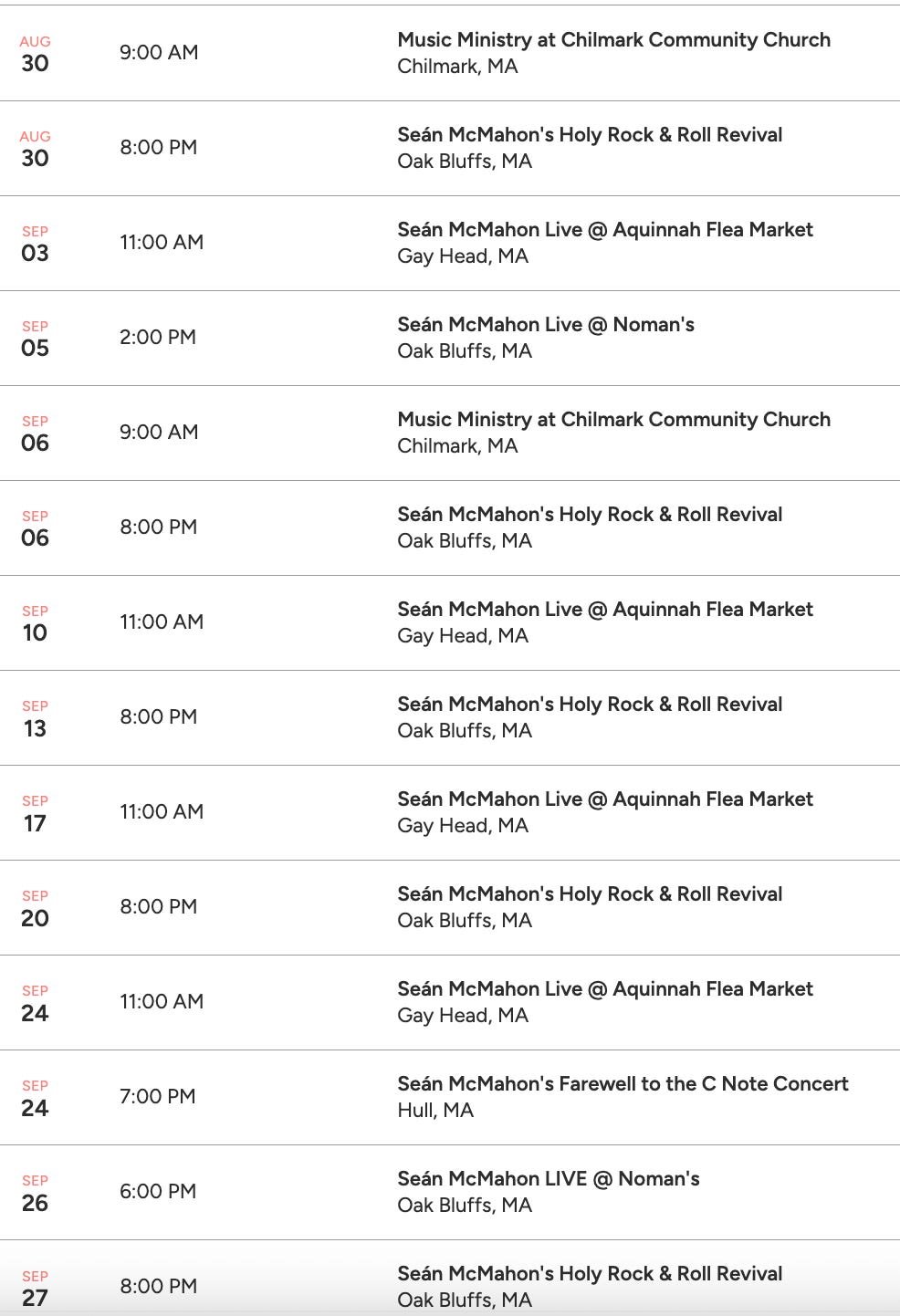
Song RequestsI’ll send you a personalized recording of your song request. Drop the song name in as a note along with your e-mail! Upcoming Appearances:
You're currently a free subscriber to Seán McMahon. For the full experience, upgrade your subscription.
|






No comments:
Post a Comment