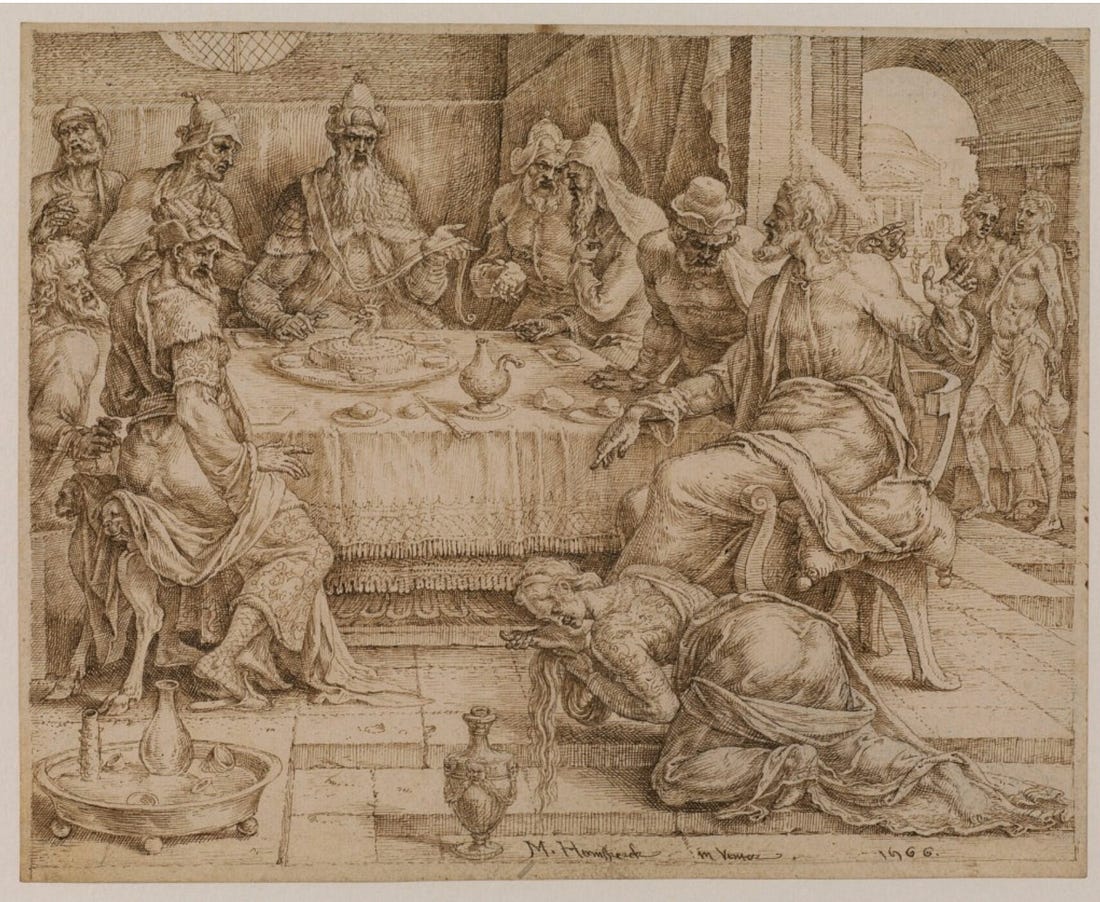
In the final week of Jesus’ ministry, something unexpected happens. Jesus was at table with his disciples at the home of Martha, Mary, and Lazarus. Mary crawls to the feet of Jesus weeping, and washes his feet with her tears, anoints them with perfume, and wipes them with her hair. Judas is livid. Just a few days later, something perhaps even more unexpected happens in Jerusalem. At the holy Passover Seder, Jesus strips off his outer garments, wraps a towel around his waist like a servant, and begins to wash his disciples’ feet. It is a striking parallel to what had happened earlier in Bethany. “You shall never wash my feet!” cries Peter. Jesus replies, “Unless I wash you, you have no part in me.” He explains: “Do you know what I have done for you? You call Me Teacher and Lord, and rightly so, because I am. So if I, your Lord and Teacher, have washed your feet, you also should wash one another’s feet. I have set you an example so that you should do as I have done for you. Truly, truly, I tell you, no servant is greater than his master, nor is a messenger greater than the one who sent him. If you know these things, you will be blessed if you do them.” What we have here is the head of the Church washing the feet of the Church. And his doing so directly echoes the prior example of a woman, who happened to use the hair of her head to wash the Lord’s feet. Turn to Paul, who said that the head of woman is man; the head of man is Christ; and the head of Christ is God (1 Cor. 11:3). There is a mysterious hierarchy here drawing together the Creator with his creation. Furthermore, Paul says something curious: woman is the glory of man, and man is the glory of God — and for this reason, a woman should cover her hair. From here, Paul goes on to discourse about the body of Christ, the Church, and its members, the Christians, where he says, “If the foot should say, ‘Because I am not a hand, I do not belong to the body,’ that would not make it any less a part of the body.” (1 Cor. 12:15). Feet, heads, hair, glory. What is the meaning of all these strange associations? Paul’s creation hierarchy makes us picture a bizarre cheerleading pyramid, as if God stands with his feet on the head of Jesus, Jesus with his feet on the head of man, and man with his feet on the head of woman. We might add one more element, from Genesis 3:15: woman standing with her feet on the head of the serpent and crushing it, as promised to Eve, the mother of the living. As strange as this pyramid seems, it’s much preferable to its opposite. This hierarchy is practically inverted by the Satanic world order we find in the New Testament, descriptively rather than prescriptively. We are presented with Satan, that ancient serpent and the devil (Rev. 12:9), ruling over all the nations (Lk. 4:6), positioned first before woman in order to devour the man to whom she gives birth (Rev. 12:4), just as the serpent in Eden first subverted Eve in order to gain dominion over Adam (Gen. 3:1-13); and the men under this diabolical dominion subjugate, and put to death, Christ under their Law; and God, in Christ, is finally subverted by the Devil. Or so it seemed. “You intended to harm me, but God intended it for good to accomplish what is now being done, the saving of many lives.” (Gen. 50:20). In light of this, we should try to understand the nature of the Satanic vs. the Divine hierarchy. Our Lord spoke in no unclear terms about this. In the hierarchy of Satan, who ruled over the nations, “You know that the rulers of the nations lord it over them, and their superiors exercise authority over them,” after the example of the serpent. “But,” he says to his disciples, “It shall not be this way among you. Instead, whoever wants to become great among you must be your servant, and whoever wants to be first among you must be your slave— just as the Son of Man did not come to be served, but to serve, and to give His life as a ransom for many.” (Mt. 20:25-28). We see, then, that the true head of humanity is its servant. It was, in fact, by servitude that Jesus was named as humanity’s head: Jesus, “existing in the form of God, did not consider equality with God something to be grasped, but emptied Himself, taking the form of a servant…He humbled Himself and became obedient to death—even death on a cross. “Therefore God exalted Him to the highest place and gave Him the name above all names.” (Php. 2:6-9). How sterling is the example of Mary of Bethany, then, who humbled herself, placing herself directly under Christ’s feet, washing them with tears and anointing them with her perfumed hair. She makes herself an image of Israel, the footstool upon whose praises the Lord is enthroned (Ps. 22:3) — and in conforming to the type of Israel, she makes herself a son of God (“Israel is my firstborn son” Ex. 4:22). That is, in submitting herself directly under Christ’s feet, she takes a “man’s place” in the Divine hierarchy. This is not worldly genderbending, but what Jesus was speaking of in the Gospel of Thomas when he said, “I will guide [Mary Magdalene] to make her male, so that she too may become a living spirit resembling you males. For every female who makes herself male will enter the kingdom of Heaven.” There is much to this enigmatic apocryphal teaching. In Christ, there is neither male nor female (Gal. 3:28); in the Resurrection, that is, Christ (“I am the Resurrection”, Jn. 11:25), men and women do not marry, but are like the angels in heaven; and angels are “ministering spirits” (Heb. 1:14), after the order of Christ, who is a “life-giving spirit” (1 Cor. 15:45), or, as Jesus in the Gospel of Thomas says, a “living spirit.” It would seem, then, that angels are classed among “males” in the Divine hierarchy. Add to this the testimony of Rev. 21:17, where the measure of an angel is the measure of a man. This is perhaps why a woman whose head is man is told to cover her hair “because of the angels,” since she is subject to that class; but when her head is Christ, as Mary of Bethany demonstrated with her devotion, she is among the angelic-males as one of their own. Hence, Mary of Bethany does not cover her hair, but uncovers it in bold devotion to the one who cleansed her and raised her up to his own angelic “male” stature with his word. This “maleness” has less to do with natural gender than it does spiritual fecundity. Jesus speaks of the Divine Word as seed (Lk. 8:11); and so the messenger, or angel, of the Word is the sower of the seed, the role of the male in nature. Judas, being a thief (Jn. 12:6), may have been horrified by Mary of Bethany’s display of devotion to Jesus because of her “waste” of the expensive anointing nard; but Peter was scandalized by his master repeating her self-effacing act of service, washing the feet of his own subordinates, because such service seemed effeminate. St. Paul said of the hierarchy between husband and wife, “As the church submits to Christ, so also wives should submit to their husbands in everything.” (Eph. 5:24). Surely Peter was bewildered — why should Christ submit to his own Bride, the Church (Rev. 21:2)? Paul answers, “Husbands, love your wives, just as Christ loved the church and gave Himself up for her to sanctify her, cleansing her by the washing with water through the word..” (Eph. 5:25-26). Christ, stripping his outer garments (symbolizing the glory of which he emptied himself in humility), so washed the disciples, even their feet. He reciprocally lowers himself even as he raises them up with his word; in this way, Christ and his Bride-Church are made one. “‘For this reason a man will leave his father and mother and be united to his wife, and the two will become one flesh.’ This mystery is profound, but I am speaking about Christ and the church.” (Eph. 5:31-32). The gendered language here might be befuddling, but at the heart of all this allegorical teaching is cosmic reconciliation: “For God was pleased to have all His fullness dwell in [Christ], and through Him to reconcile to Himself all things, whether things on earth or things in heaven, by making peace through the blood of His cross.” (Col. 1:19-20). Male, seed-sowing heaven, was formerly “above” as head; female, womb-like earth, was formerly “below” as feet and footstool; but the humility of the Cross has reconciled them in one purpose. All creation has become the body of Christ, who is all and in all (Col. 3:11). The hand indeed cannot say to the foot, “I don’t need you,” or else this would deny the “fullness” that is in Christ. The feet of the Church, as the “lowest” of the cosmic body of Christ, must also be washed, and this is the duty of those members who call themselves Christ’s hands or even presume to share in his headship (1 Cor. 12:21) — this is the lesson of Christ’s foot-washing on Maundy Thursday. Christ also has a dire warning to those who refuse this duty of humility. “Whoever humbles himself like a little child is the greatest in the kingdom of heaven…[but] if anyone causes one of these little ones—those who believe in me—to stumble, it would be better for them to have a large millstone hung around their neck and to be drowned in the depths of the sea.” (Mt. 18:4, 6). Like the Lord, we are not to be “respecters of persons.” If the world says someone is unworthy of honor, how much more should we show them charitable honor: “the parts of the body that seem to be weaker are indispensable, and the parts we consider less honorable, we treat with greater honor. And our unpresentable parts are treated with special modesty, whereas our presentable parts have no such need. But God has composed the body and has given greater honor to the parts that lacked it, so that there should be no division in the body, but that its members should have mutual concern for one another. If one part suffers, every part suffers with it; if one part is honored, every part rejoices with it.” (1 Cor. 12:22-26). In other words, if we find ourselves being judgey towards others, we have forgotten the Gospel, and overlooked that they are all the more blessed in light of Calvary: “Blessed is the one whose transgressions are forgiven, whose sins are covered” (Ps. 32:1) even as the “unpresentable parts” of our bodies are honored by being given special “covering”. This is how our God, the Father of Prodigal Children, the Shepherd who leaves the ninety-nine in search of the one, feels toward all his wayward children, the members at the extremities of his holy body. We should never forget this. So much of the Body of Christ is cleansed by the Word, and these are like the Good Son and the ninety-nine sheep; but the “feet” at the lowest extremity must still be washed, and these are the prodigal children, the lost sheep. The Ascended Christ is seen in a vision by John, and he describes his body. His hair white like wool — even the top of the “head of the sheep”, in other words, bears resemblance to those sheep whom he shepherds. His feet are like burnished bronze, a metal associated with purification and healing — the temple’s baptismal font was bronze; the bronze serpent, to whom Jesus likened himself, healed the wayward children of Israel in the wilderness; bronze is an alloy of copper and tin, which are “dross” (Ez. 22:18), forged and purified by fire, as we are by the Holy Spirit. In other words, John sees many signs in his vision of the body of Christ that the Lord partakes as fully in mankind as mankind may partake of Divinity according to the promise of the Gospel. Now the Old Testament, in which the mysteries of the Gospel were bound and veiled, foresaw a day when the Lord’s feet would touch down on the Mount of Olives (Zech. 14:4); the authors of the Gospel interpreted this prophecy to be fulfilled by Jesus’ triumphal entry, when he descended the Mount of Olives into Jerusalem after his visit with Mary and Martha in Bethany. Mary of Bethany, then, prepared his feet for this eschatological triumph. And yet Jesus himself said she was anointing him for burial (Mk. 14:8). Indeed, Jesus identified his own exaltation with the Cross, by which he would shed his blood for the purification of his people. The triumph of the Cross is that good news of which Isaiah proclaimed, “How beautiful on the mountains are the feet of those who bring good news, who proclaim peace, who bring good tidings, who proclaim salvation, who say to Zion, ‘Your God reigns!’ (Is. 52:7). In cleansing and sanctifying the true Zion, his people, he made it holy ground, where we are commanded to take off our sandals if we wish to stand there (Ex. 3:5). We should, as Jesus taught, allow him to cleanse our feet, lest we have no part in him; we must make no pretense at being high and mighty, holier-than-thou; but recognize that Christ has cleansed and sanctified the whole creation, from head to feet. All have a part in Christ, and are members of his body.
Maarten van Heemskerck's Magdalene washing the feet of Christ in the House of SimonSong Meditation: “Unless I Wash Your Feet”
Unless I wash your feet |




Hymns and Homilies, by Seán McMahon Seán McMahon |
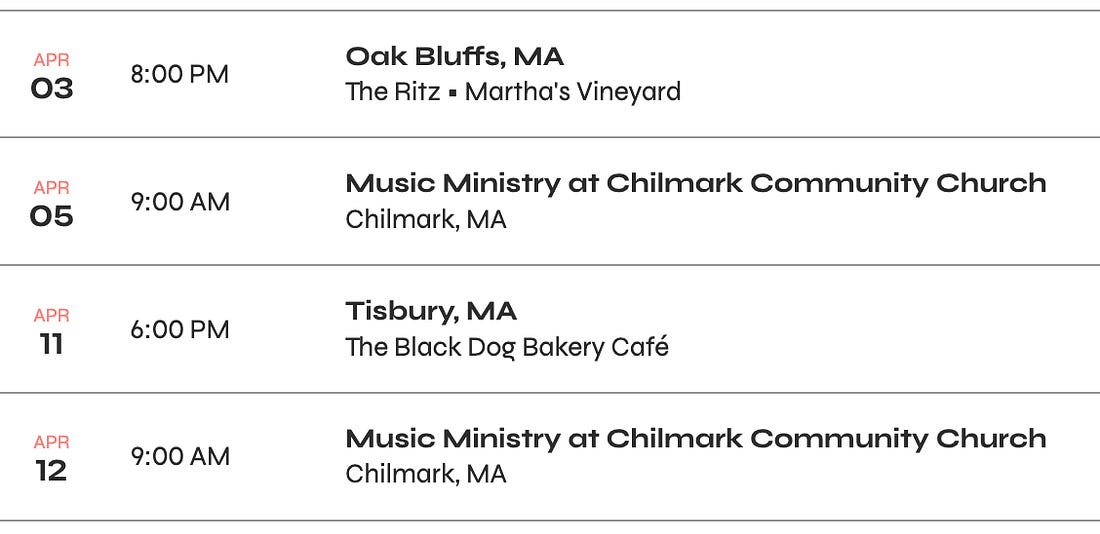
Upcoming Appearances:
 |
You're currently a free subscriber to Seán McMahon. For the full experience, upgrade your subscription.
| ||||||||||


No comments:
Post a Comment