The Glory of Christendom and the Humility of Christ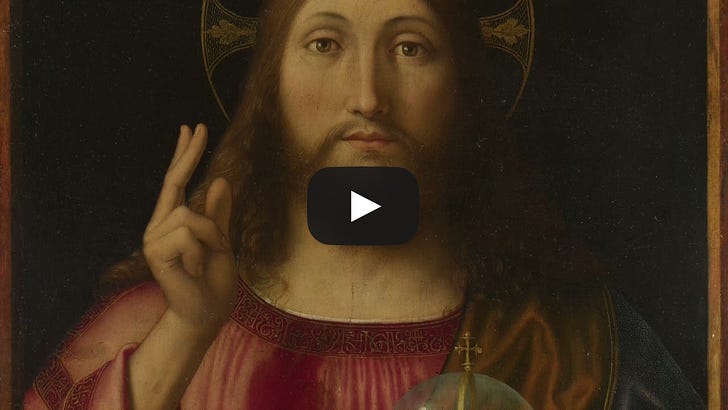 There would seem to be a contradiction between the humility of Christ and the glory of Christendom, that great edifice of Christian civilization. The Christ for whom the great cathedrals were built; Crusades were fought; Inquisitions were tried; Reformations and Counter-Reformations were pursued; and blood was indeed shed, was a lowly carpenter Christ local to the Levant. Doubtless, he was, by nature, God, but he “did not consider equality with God something to be grasped, but he emptied himself, taking the form of a servant.” (Phps. 2:6-7). It was in this humble form that he desired to be seen, heard, and imitated when he came among men. So why such glorying in the name of such a humble person? Some, when they walk into the great cathedrals of Europe, cannot take the beauty and grandeur as anything other than vanity and hubris. “All this,” they ask, “in the name of the carpenter king? “Surely this money could have been given to the poor,” they add, echoing Judas Iscariot (Mt. 26:9). The letters of holy writ cast light on the “why” of Christendom. It’s no accident that the great empire of Christ arose as it did, but evidence — of divine order ordained from the foundation of the earth. It is admittedly difficult to explain Christendom to its more agnostic, if not atheistic, citizens. Nonetheless, citizens of Christendom they are indeed. All are. It’s the Lord's world — we’re just living in it. John the Revelator saw a vision in which the great gospel was proclaimed by an angel: “The kingdom of the world has become the kingdom of our Lord and of His Christ, and He will reign forever and ever.” (Rev. 11:14). The seer was ancient and so was the vision. The Kingdom of God, in fact, has always been present in mystery, subsisting first in Eden, then in Noah’s Ark; in the dreams and loins of Abraham, then in the ark and tablets of Moses; in the first Messiahs of Israel, David and his son Solomon; in the father’s crown and scepter and in the son’s temple; in the oracles of the prophets and in the hopes of those few who believed them; in the remnant of Judah returning from Babylon, and lastly, hidden in the womb of Mary until the moment of revelation finally came. “When the fullness of time had come, God sent his Son” (Gal. 4:4) who proclaimed: “the time has come. The Kingdom of God is at hand. Repent, and believe the good news!” (Mk. 1:15). In John’s vision, this proclamation is a trumpet blast signifying “the mystery of God” is fulfilled. St. Paul wrote that this mystery “was not made known to men in other generations,” but that in his time it had been made known by the apostles of Christ: “this mystery is that through the gospel the nations are fellow heirs [together with Israel], fellow members of the body, and fellow partakers of the promise in Christ Jesus.” (Eph.3:5-6). The glorious gospel, then, is the proclamation of the kingship of Jesus of Nazareth over all nations. All nations have been absorbed into Israel because when he was lifted up, Jesus drew all men to himself (Jn. 12:32). Far from the Church of Jesus Christ superseding Israel, the Church and Israel are, in Christ, one and the same — and Israel has therefore superseded the world by Christ. The great wedding feast of God (Rev. 19:17) had brought together the pure heavens and the lusty earth, the veil of enmity between them torn asunder by Christ, who made peace between the two by his shed blood. By rights of mercy, the perfect one rules over the imperfect, making all who were captors of sin debtors to the one who forgives us. This is the sense of the vision John recorded in Revelation 19: Christ riding the white horse of spiritual warfare; leading the apostolic armies of heaven; wearing the many royal crowns of every nation on his head, because by rights of mercy he has made them his own; his robe dipped not in the blood of his enemies, but his own blood; wielding a sword not of steel, but that of the spiritual word “with which to strike down the nations and he will rule them with an iron scepter.” The iron scepter evokes the iron legs and feet of a statue seen in a dream by Nebuchadnezzar long before the Day of Christ, which the prophet Daniel interpreted to signify that empire which would rule at the time of Christ’s manifestation (Dan. 2). A rock is cut out of a mountain by divine hands, hurled at the statue, and the statue crumbles while the stone becomes the greatest of all mountains. Daniel tells Nebuchadnezzar — known at that time as the “king of kings” — that the rock would be Christ, for whom “the God of heaven will set up a kingdom that will never be destroyed, nor will it be left to another people. It will shatter all these kingdoms and bring them to an end, but will itself stand forever.” (Dn. 2:44). In another vision, Daniel saw that this would be the time of the great judgment, when “the Ancient of Days…pronounced judgment in favor of the saints of the Most High” (Dn. 7:22) and “the sovereignty, dominion, and greatness of the kingdoms under all of heaven will be given to the people, the saints of the Most High.” (Dn. 7:27). And so we see that the empire standing at the time of Christ’s manifestation — Rome — was promised to the saints. It was during that Empire’s reign over the nations when God would “come to be glorified in his holy people and to be marveled at among all those who have believed” (2 Thess. 1:10). It is no coincidence that when the Gentiles first came to seek Jesus, he declared, “the hour has come for the Son of Man to be glorified.” (Jn. 12:20). He spoke not of being enthroned in Jerusalem, but going to the cross to shed his blood — not just for Jews only, or even a restored Israel only, but for the whole world. He did this “so the nations would glorify God for His mercy.” (Rom. 15:9). The glory of Christendom, then, is Christ glorified in his saints, and his saints glorified in him. The Bible urges us toward glory in mercy: “accept one another, then, just as Christ accepted you, in order to bring glory to God.” (Rom. 15:7). We should see the great edifice of Christendom in this light: man’s attempt to “do everything in the name of the Lord Jesus Christ, giving thanks to the Father” (Col. 3:17). Man’s part in Christendom is gratitude incarnate — and this we should do to the highest degree of our ability. St. Peter urges us toward excellence: “make every effort to supplement your faith with virtue, and virtue with knowledge, and knowledge with self-control, and self-control with steadfastness, and steadfastness with godliness, and godliness with brotherly affection, and brotherly affection with love." (2 Pt. 1:5-7). This is a supplement to faith. The supplement does not save: Jesus does. Our faith allows us to glorify him in our participation, whereby he is glorified in us. In this way, “God will count [us] worthy of his calling” (2 Thess. 1:11) — not that we must first be worthy in order to receive his grace, but that we may honor him for the gift he has already given us — and “he will powerfully fulfill your every good desire and work of faith, so that the name of our Lord Jesus will be glorified in you, and you in Him, according to the grace of our God and of the Lord Jesus Christ.” (2 Thess. 1:11-12). Might we ever reach perfection in pursuit of this worthiness? Perfection seems impossible, and yet, scripture speaks of it: “let steadfastness have its full effect, that you may be perfect and complete, lacking nothing” (James 1:4); “be perfect as your Father in heaven is perfect.” (Mt. 5:48). It would seem impossible for man, but nothing is impossible with God (Lk. 1:37); the perfect Son indeed came to reveal the perfect Father, to the end that “whoever believes in Me will also do the works that I am doing. He will do even greater things than these, because I am going to the Father. And I will do whatever you ask in My name, so that the Father may be glorified in the Son. If you ask Me for anything in My name, I will do it.” (Jn. 14:12-14). The Lord wants us to dream big. He wants us to ask him for big favors. He wants our vision to be wide and all-encompassing: “everything is yours, whether…the world or life or death or the present or the future—all are yours, and you are Christ’s, and Christ is God’s." (1 Cor. 3:21-23). Therefore, Christendom is our imperative: ever-expanding, all-encompassing greatness in the name of Christ. St. Peter, named after the rock which would shatter and absorb the Roman Empire, has ever had a successor on the throne in the city at its heart. The one wearing the Petrine mantle has traditionally been head — official or unofficial, ruling in charity or tyranny — of Christendom. Pope Leo XIV, who today exercises Peter’s ministry, reminds us of the meaning of his Petrine namesake, and what it reveals about our vocation to excellence in Christendom: “The Apostle Peter himself tells us that Jesus ‘is the stone that was rejected by you, the builders, and has become the cornerstone (Acts 4:11). Moreover, if the rock is Christ, Peter must shepherd the flock without ever yielding to the temptation to be an autocrat, lording it over those entrusted to him (cf. 1 Pet 5:3). On the contrary, he is called to serve the faith of his brothers and sisters, and to walk alongside them, for all of us are ‘living stones’ (1 Pet 2:5).” When we build Christendom, then, “it is never a question of capturing others by force, by religious propaganda or by means of power. Instead, it is always and only a question of loving as Jesus did.” Indeed, when Jesus said “I am glorified in them” (Jn. 17:10), there is a condition: “Remain in Me, and I will remain in you. Just as no branch can bear fruit by itself unless it remains in the vine, neither can you bear fruit unless you remain in Me. I am the vine and you are the branches. The one who remains in Me, and I in him, will bear much fruit. For apart from Me you can do nothing. If anyone does not remain in Me, he is like a branch that is thrown away and withers. Such branches are gathered up, thrown into the fire, and burned. If you remain in Me and My words remain in you, ask whatever you wish, and it will be done for you. This is to My Father’s glory, that you bear much fruit, proving yourselves to be My disciples.” (Jn. 15:4-8). By the fruits, the tree is known. Therefore, in order to glorify our root, Christ, we must bear Christian fruit in a life of imitation of Our Lord. St. Paul puts it bluntly: we must “suffer with him in order that we may also be glorified with him.” (Rom. 8:17). The next time you gaze at a grand cathedral, consider then the suffering it took to build. Centuries’ worth of diligence. The Cologne Cathedral took six and a quarter centuries to build. Let’s not pretend there isn’t suffering in hard work, there is. This was the hard work of generations, living and dying in this labor. All of this for a building — a meeting-place and shelter, yes, but also, an icon of heaven, and a symbol of the mysteries revealed in Christ. How much more suffering is required to “build” the spiritual edifice of Christendom — that Kingdom above all others, and yet hidden to its enemies, who have long been eager to beat, behead, burn, crucify, hang, draw, quarter, and more, those angelic messengers who proclaim the truth of Christ’s Kingship over all? The blood of the martyrs is one in holy communion with Christ’s, who died for all that this truth may be revealed and proclaimed to the blind, and His resurrection preached to the spiritually dead. May we all walk with Christ in the Via Dolorosa of his Passion for the sake of His glorious Kingdom. Christendom is not so much built as it is revealed, for Christ is King no matter what — but he must be revealed in his Church, glorified in his saints. The church calls this sanctification “theosis”. “When he appears,” St. John wrote of theosis, “we shall be like him.” (1 Jn. 3:2). That is, Christ appears in us when our imitation of him reaches perfection. In this manner “he will transform our lowly bodies so that they will be like his glorious body.” (Phps. 3:21). We pray that our bodies may so become the bodies, and body, of Christ by the indwelling of his Spirit. In this way, the humble Christ is translated into the glory of Christendom. Amen. You're currently a free subscriber to Seán McMahon. For the full experience, upgrade your subscription.
|
Tuesday, May 27, 2025
The Glory of Christendom and the Humility of Christ





Subscribe to:
Post Comments (Atom)
No comments:
Post a Comment