
"Spirit In The Sky" and American ChristianityMusical meditation on American Christianity in the AI age
Norman Greenbaum’s Spirit in the Sky is immediately recognizable. Its bluesy 60’s fuzz guitar riff is rendered iconic in tandem with lead guitarist Russell DaShiell’s eerily bent and descending dominant 7th double-stop line which blinks in and out of sonic space like the doppler effect of a police siren passing by. The drums kick in with a classic blues shuffle. Greenbaum’s rather dull, unaffected vocal enters, “When I die and they lay me to rest, gonna go to the place that’s the best…” If the fuzz effect on the guitar takes this song out of the realm of traditional blues, the lyric takes it out of the realm of “Blue Suede Shoes” early rock and roll: we are immediately confronted with death. Not if, but “when I die.” As the lyric’s gospel themes unfold, a small female gospel choir enters — Oakland’s Stovall Sisters. The triumphant bridge, the only harmonic variation in the song (I-VIIb is added to the song’s repetitive I-IIIb-IV progression), features an unapologetically “rock and roll” guitar solo of the kind that would come to dominate popular rock music in the 70’s and beyond. After another verse and chorus, the song fades out as DaShiell solos yet again, noodling over the verse riff. The song was released in December of 1969 following the “Summer of Love” and peaked at #3 on the Billboard charts in April of 1970. Its success was not anticipated by record executives, for whom a 4 minute song was rather long for a standard single (2-3 minutes). But the song both captured and landed in a cultural moment: the Jesus Movement was growing in Los Angeles and the San Francisco Bay Area, where Greenbaum lived and recorded the track. Some participants in Haight-Asbury’s counterculture had discovered that free love was costly, and so was drug use — and they weren’t finding the answers they were looking for in the anything-but-Christianity philosophies and cults they’d been experimenting with. Area preachers like Calvary Church’s Chuck Smith opened their doors to these lost hippy sheep, and some of them, like Lonnie Frisbee, became the first faces of the “Jesus Freaks,” born-again Christians who retained their hippy aesthetics — including rock and roll. Greenbaum anticipated the need that would later be met at operatic scale by Webber & Rice’s Jesus Christ Superstar in October 1970 and Schwartz’ Godspell in May of 1971. But Greenbaum’s Spirit in the Sky beat them to it, and cashed in on the new Jesus People market. I’ve always loved this song. The guitar riff is just so cool. I first heard it as a youngster in the movie Wayne’s World 2, in one scene during a recurring sequence where mythical 60’s roadie Del Preston is training Wayne’s ragamuffin friends to crew an ambitious Woodstock-inspired festival. Del’s PTSD-ridden portrayal is a nod to Vietnam veterans who never “got their head out of the game,” and the scene gets its laughs in the absurdity of the measures he prescribes them — instructing them to pop cyanide pills if things go awry, etc. Spirit in the Sky is used as a period prop to support the “Vietnam vibe,” and I wouldn’t be surprised if this scene is a parody of a serious Vietnam film that used the song in a similar context. Like CCR’s Fortunate Son, the period association is so strong, you can practically hear the Huey helicopters. 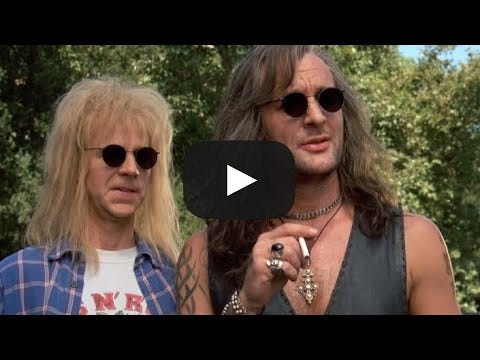
The connection to war is peripheral to the song’s purpose of course, but noteworthy. Greenbaum’s lyric is in a constant state of preparation for the moment of death. And the distorted electric guitar sound in this song went on to define a genre densely populated by songs about death and war, namely, heavy metal — think Black Sabbath’s “War Pigs” and Metallica’s “For Whom the Bell Tolls.” Spirit in the Sky’s drum part, a shuffle, is by no means a military march, but then again, its era’s militaries had long ago abandoned the little drummer boy’s measured march. The sound of 20th century war is, in fact, that of heavy metal, literally: tanks, planes, choppers, bullets, bombs. History plainly tells us that the sound of 20th century heavy music only developed after this. Many point to the Beatles’ “Helter Skelter”, a 1968 fuzz-guitar song which will never shake its association with the Manson Family murders, as the first heavy metal song. But the sonic influence here was Jimi Hendrix, who wielded his innovative, overdriven guitar sounds to protest the Vietnam war with songs like “Machine Gun”, and led many musicians of his generation on much the same mission. The sound of late 60’s rock, of which Spirit in the Sky is an exemplary specimen, is rather difficult to separate from themes of death and war. Spirit in the Sky’s lyric is quintessentially Christian, however (with a catch, to be discussed later). Greenbaum expresses certainty that when he dies, he’s “gonna go to the place that’s the best...up to the Spirit in the sky.” The second verse turns to evangelize the audience, boldly proclaiming Jesus by name: “Prepare yourself, you know it’s a must / Gotta have a friend in Jesus” so that they may have confidence that they’ll get to the Spirit in the Sky by his recommendation. So far, this is relatively conventional Christian theology, with the warning of the wages of sin — death — and the gospel of Christ’s friendly intercession. But the catch, caught and criticized by many Christians then and since, comes in verse three: “Never been a sinner / I never sinned”. This flies in the face of Romans 3:23’s “all have sinned and fall short of the glory of God.” To understand the “unconventional theology” behind this lyric is to gain the greatest insight into why this song exists and what it represents. As it turns out, Greenbaum was not a Christian, let alone a Jesus freak. He said he “flubbed” this lyric for complete ignorance of Christian theology. Like Bob Dylan and Keith Green, Greenbaum was Jewish — but unlike these two musicians, who joined the Jesus Freaks and wrote their anthems, Greenbaum never embraced the faith. Rather, as the story goes, he was watching The Porter Wagoner Show on TV one night, and as the show closed with a gospel tune, he thought, “Yeah, I could do that.” He sat down and wrote Spirit in the Sky in 15 minutes. He borrowed the title from a Hopi-inspired greeting card. Modern critical theorists might cry “appropriation” at a white man nicking not only black gospel but Hopi religion, if not a Jew pantomiming Christian faith (I’ve certainly been accused of the latter in my time). But this is quintessential Americana, all the more because the inspiration came from the television, and the product generated a fortune. And while Greenbaum’s theologically questionable third verse raised concerns among Christians, nevertheless, the song was overwhelmingly embraced by the Jesus People, and many Christians since. Artists like DC Talk, and less famously myself, simply change the lyrics of the third verse to better match Romans 3:23: “If you’ve ever been a sinner / If you’ve ever sinned,” etc. The question of appropriation might be a red herring — as the Sybilline oracles were long ago enculturated into the Church, so also Spirit in the Sky in the American church. And yet the convergence of secular culture and technology, so characteristic of Spirit of the Sky (ignorance of religion; television and greeting inspiration; proto-”heavy metal” studio production), remains a touchy subject to this day, though the forms are ever-changing. We have moved on from the late 20th century controversies around whether or not Creed can truly be called a “Christian band” to whether or not Solomon Ray, an AI-generated “gospel artist” whose song reached #1 on the charts in 2025, can be called an “artist”, let alone “Christian”. Is the medium the message? The American people have spoken, and the answer is “no.” What might this say about American Christianity? This is certainly not the type of high liturgical faith in which every form is carefully crafted to reflect its heavenly archetype; it’s far too freewheeling to have much in common with this. In fact, it might be all the more exciting to the American Christian when the medium does not match the message. The patterns of American Christianities have so long tended towards intentionally transgressing prior norms, and continues to this day, whether Pastor Marc Driscoll’s expletive-laden diatribes about the crisis of masculinity at his “conservative” Mars Hill Church, or Jay Bakker’s tattooed and pierced presentation at his “progressive” Revolution Church, to name relatively recent examples. Their aesthetic is as colloquial as their homiletics, and their followers reckon it to them as righteousness, while detractors find them vulgar and unqualified. The controversies around these men perpetuate the pattern associated with names like Whitefield, Finney, Graham, and in Greenbaum’s day, Frisbee, for whom aesthetic dissimilarity to conventional religion was rather a proof of the Spirit’s inspiration. Solomon Ray’s apologists do not deny that the Spirit, blowing where it will, fills “his” music. His critics wonder if it is “music” at all, and cannot tolerate the deep-dream regurgitations of a machine (but let us muse on the comparison between Greenbaum’s method of generating a “gospel song” based on a televised, real-time reproduction of a live performance vs “Solomon Ray’s” generation of a “gospel song” based on “machine-learning” a database of millions of digital song files within a matter of seconds), no matter how close a proxy they are to other “Spirit-filled” Christian Contemporary Music hits. But these critics have their spiritual ancestry, perhaps, in those who could not tolerate a profit-driven “gospel” song by a Jew who didn’t know the first thing about Christian theology. On the other hand, Norman Greenbaum’s Christian fans, like Solomon Ray’s, are less concerned with how a song is made and more about how it makes them feel. The American Christian compartmentalization of medium and message, of course, raises the question of which other fundamental elements of our faith might be compartmentalized, such as body and spirit, and driving the objectifying bifurcation of medium vs. message. If so, it would seem that those factions today who argue for the notion of America’s “Christian founding” might best cease their squabbling over whose planting this Christianity is — Calvin’s or Wesley’s — by admitting that perhaps American Christianity might be the garden of Valentinus. 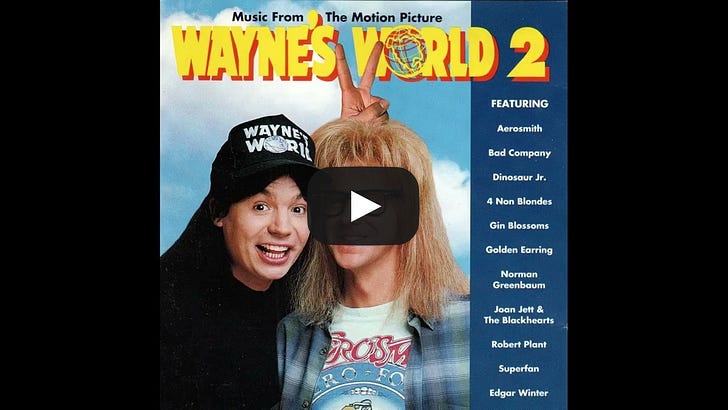
You're currently a free subscriber to Seán McMahon. For the full experience, upgrade your subscription.
|




No comments:
Post a Comment